Building the Next Generation of Interoperability in Europe
Knodia is a lightweight, federated and scalable framework that enables secure, privacy-first cross-border data exchange.
Join and shape Knodia
Interoperability that Works Across Europe
Knodia, developed according to the guidelines set in the European Interoperability Framework, enables seamless and secure cross-border data exchange while preserving sovereignty and compliance.
Who It Is For
Knodia: a Federated Web of Nodes
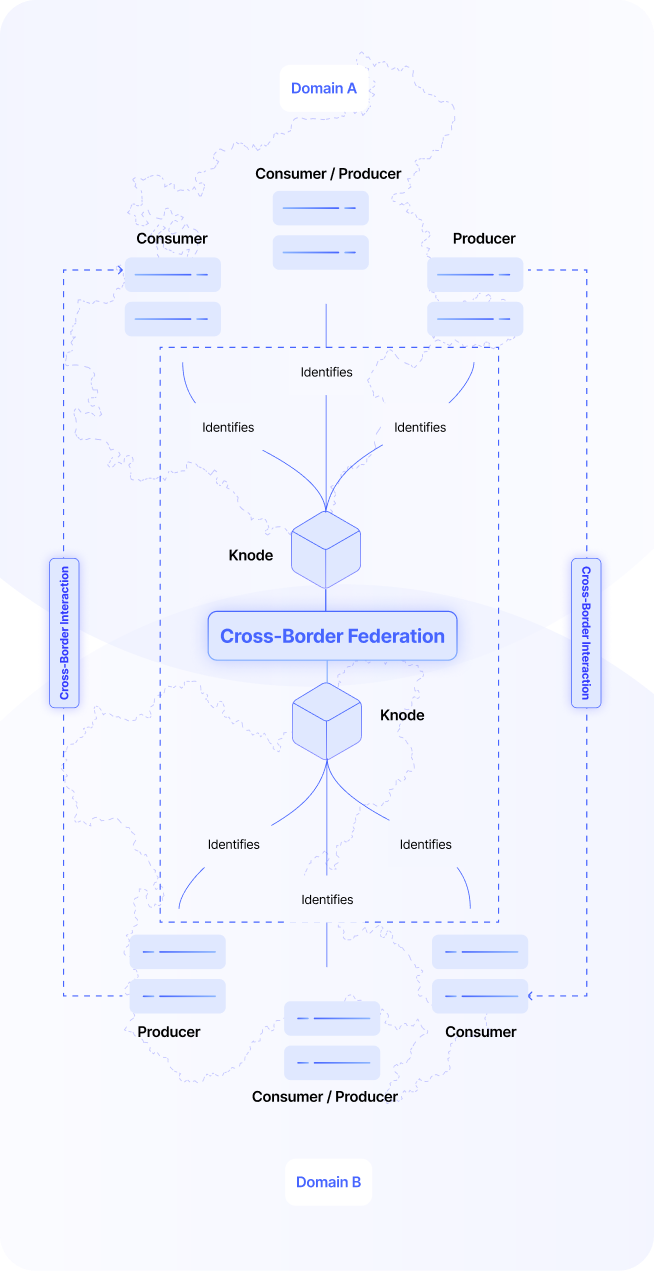
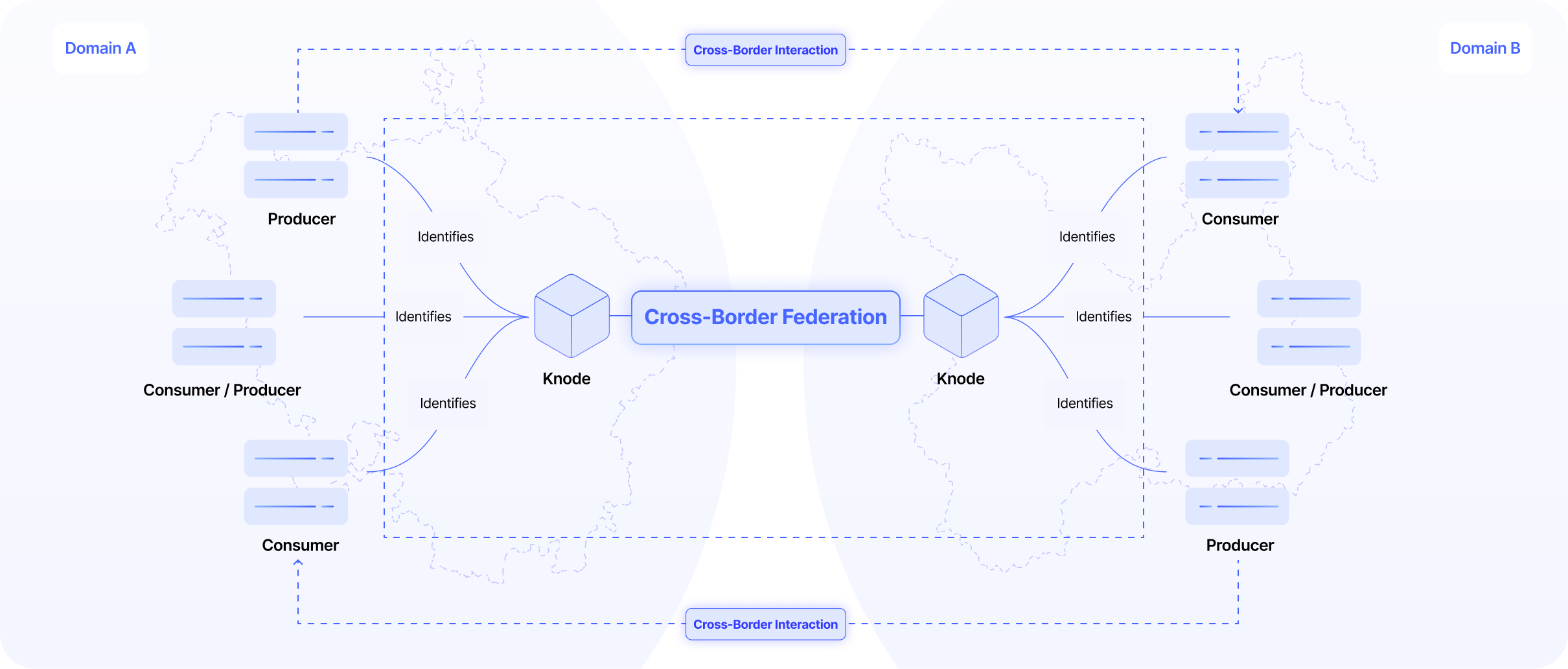
A network of trusted node (Knodes) that enables organisations to connect once and interact with all participating entities across Europe.
How Knodia Addresses the Four Levels of Interoperability
Legal Interoperability
GDPR compliant with the possibility to extend information and actions to comply with national regulations for each Knode.
Organisational Interoperability
Clear roles (Knode, API producer, API consumer) with agreements based on Federated Attributes.
Semantic Interoperability
Federated Attributes and Federated Categories managed by the Knodia Consortium to profile parties and define API access.
Technical Interoperability
Strong trust among the Knodes, then federated protocol based on open standards for the issuance of access tokens to producers' APIs.
Different Needs, One Flexible Model
Knodia provides a unified, scalable framework that overcomes the limitations of today's fragmented installation models.
High Costs
Heavy systems and upkeep effort
Operational Efficiency
Lower overhead through lighter setup
Hard to Scale
Difficult to manage as parties increase
EU-Ready Growth
Designed for cross-country expansion
Legal Fragmentation
Different models and compliance rules
Common Standards
Federated approach respecting sovereignty
Complex Onboarding
Setup demands significant effort
Fast Adoption
Clear specifications enable quick rollout
Tested, Trusted & Scalable
Drawing on operational experience in one Member State, the Knodia approach has shown practical applicability and architectural robustness.
Technology-Agnostic
Designed to interoperate with existing systems; no vendor dependency.
Lower Costs
Reduced operational, maintenance and certification overhead.
API—First Approach
Simple integration with modern digital services.
Legal and Privacy First
Aligned with EIF, GDPR and the principles of the Interoperable Europe Act.
Scalable
Built on insights from a production-scale ecosystem involving 9,000 organisations.
From Concept to Pilots
Knodia is actively progressing from technical specification to real-world implementation.
Current Work
Defining reference architecture and core services for Interop Knodes
Partnering with institutions for cross-border experiments
Supporting governance frameworks and operational guidelines
Timeline & Next Steps
Prototype Development
(by June)Run prototype rollout with internal example nodes
Pilot Expansion
Extend pilots to new use cases
Iterative Refinement
Refine specifications and governance based on insights
Join & Shape European Interoperability
We are inviting Member States, EU institutions and organisations to co-design the future of European interoperability.
For Member States
Manage trusted Knodes while preserving sovereignty.
For EU Institutions
Deploy Knodes for standardised, cross-institutional exchange.
For Organisations
Use a single integration point for cross-border interactions.
How to Participate
Join pilots and proofs-of-concept
Help shape specifications and governance
Contribute to the shared framework for Europe
Future Consortium
A Consortium of Interop Knode Operators will maintain specifications, semantic assets and governance models, ensuring the sustainable evolution of the federation.
DTD and PagoPA are seeking partners to shape the Knodia approach together

